
Last updated November 14, 2026
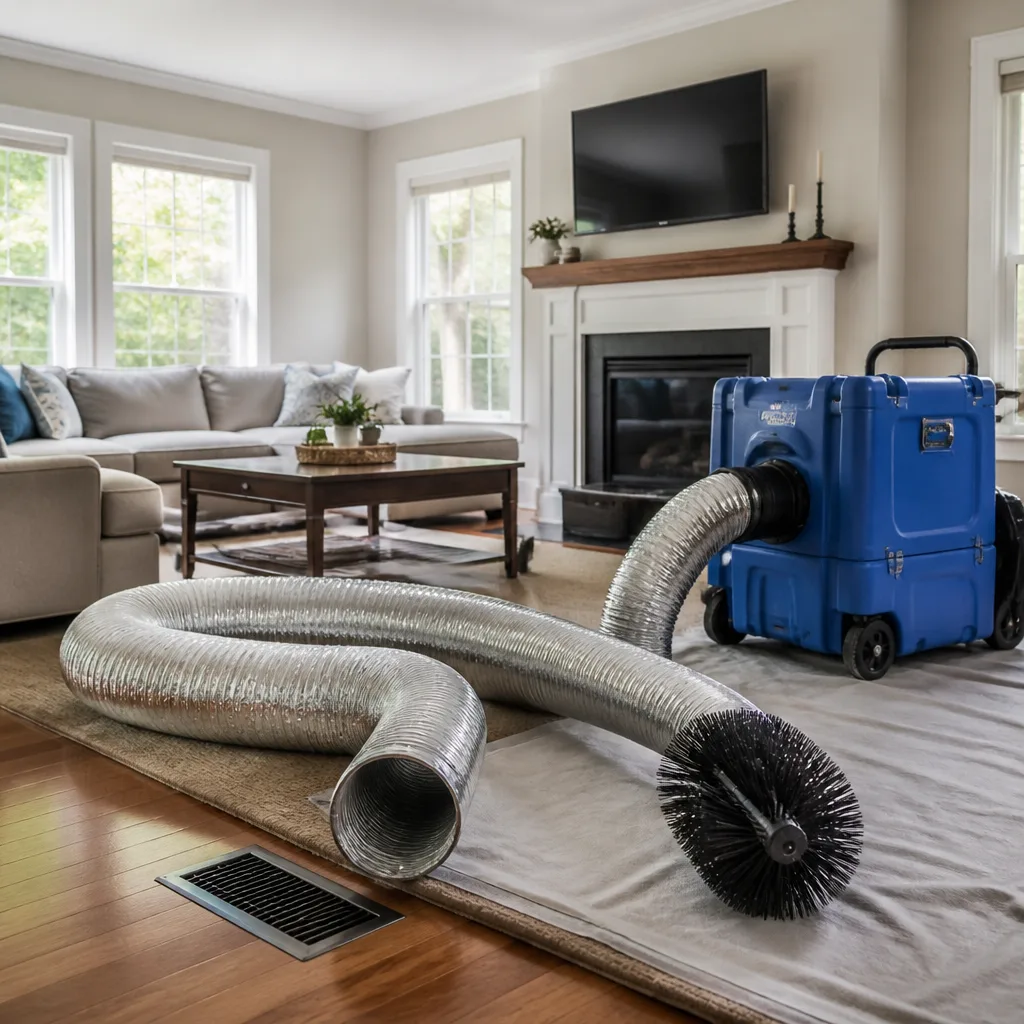 Whole-home duct cleaning
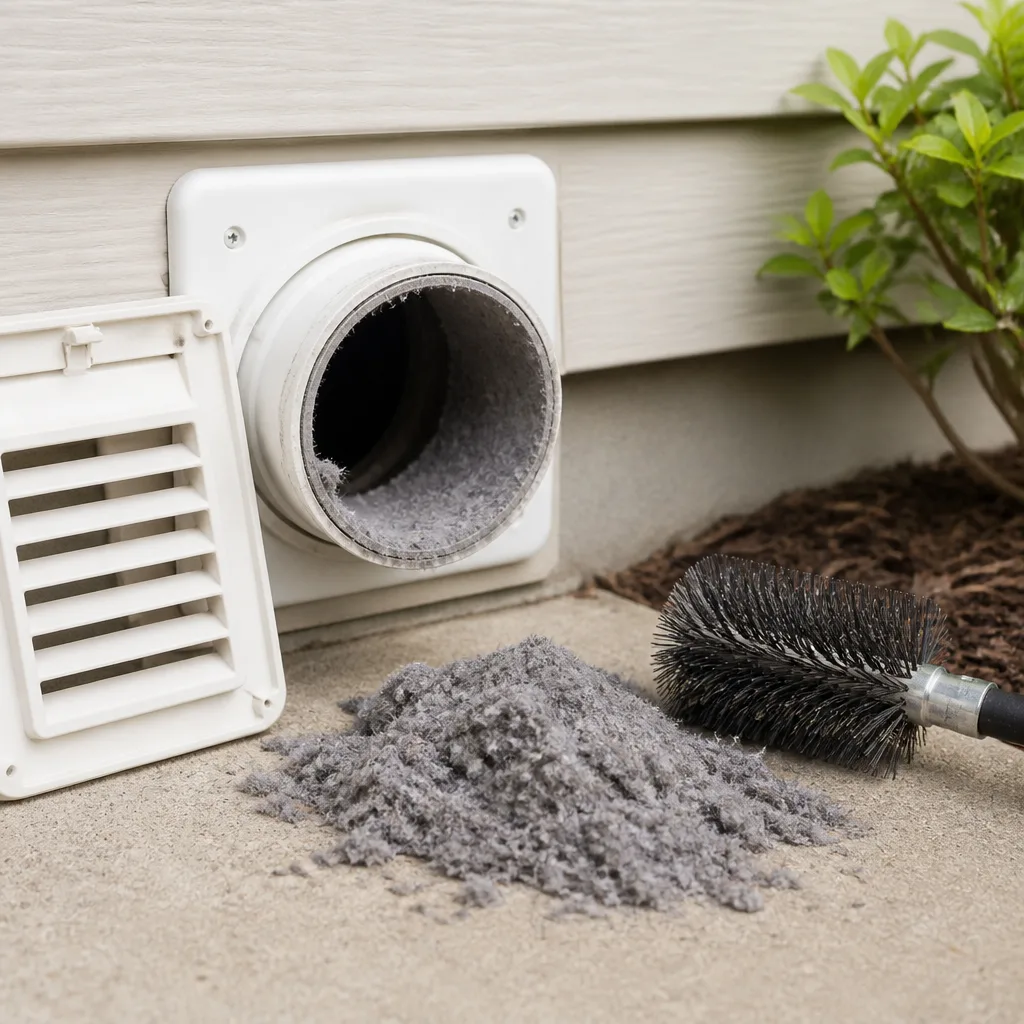 Dryer vent cleaning
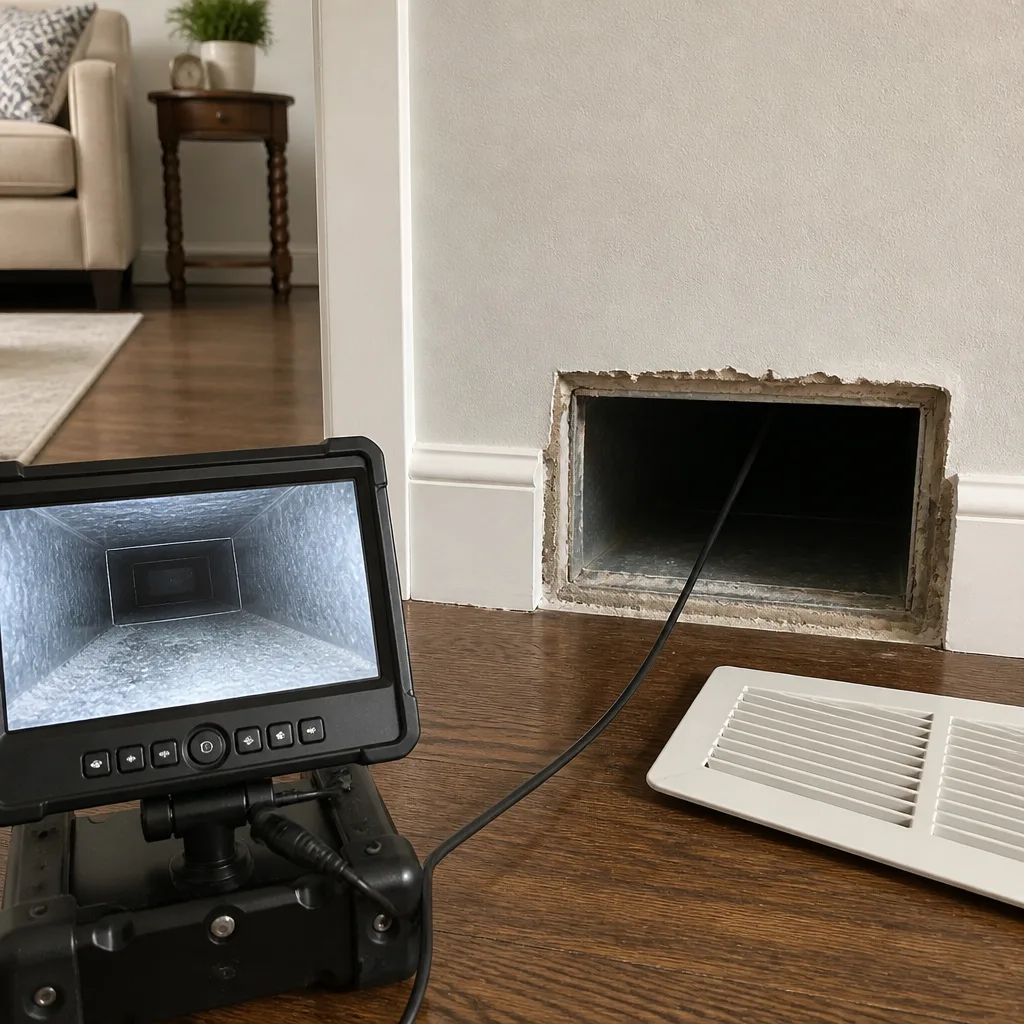 Camera inspection
 Sanitizing & deodorizing
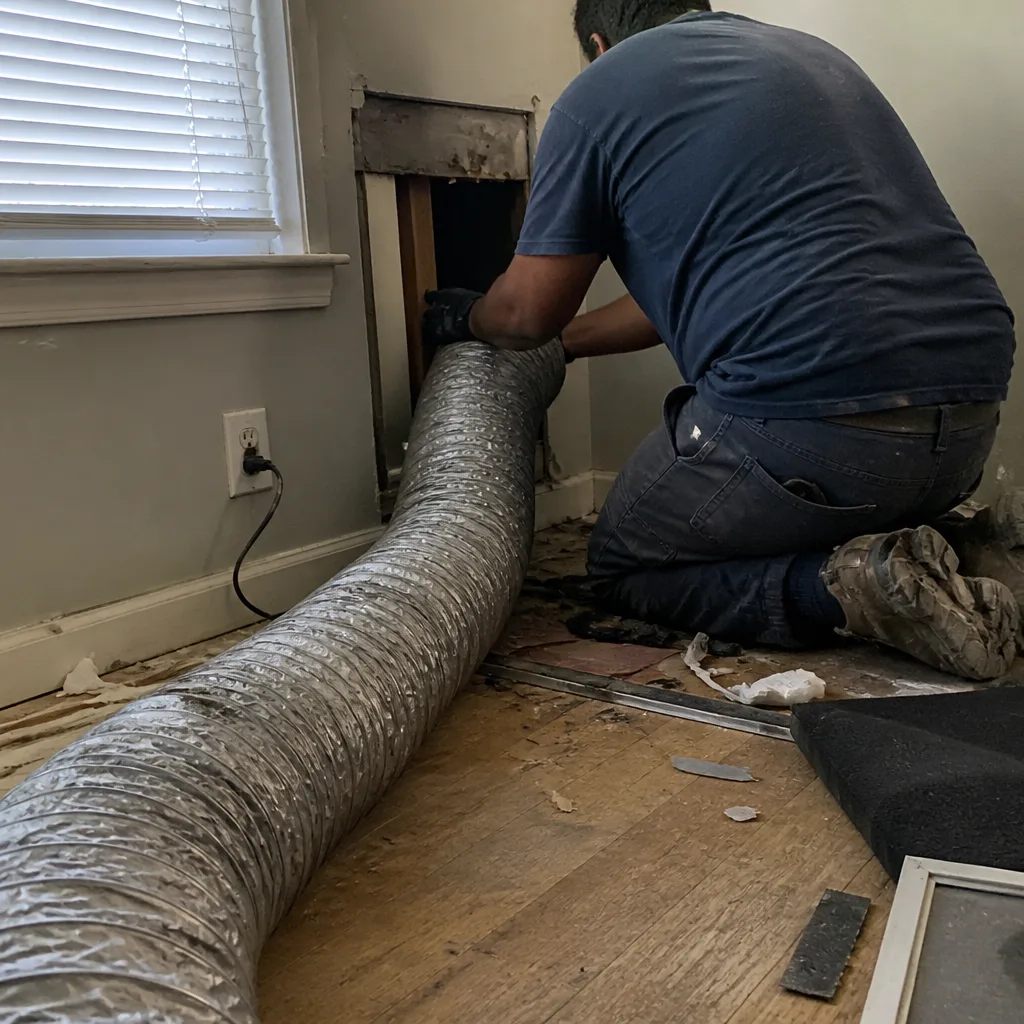
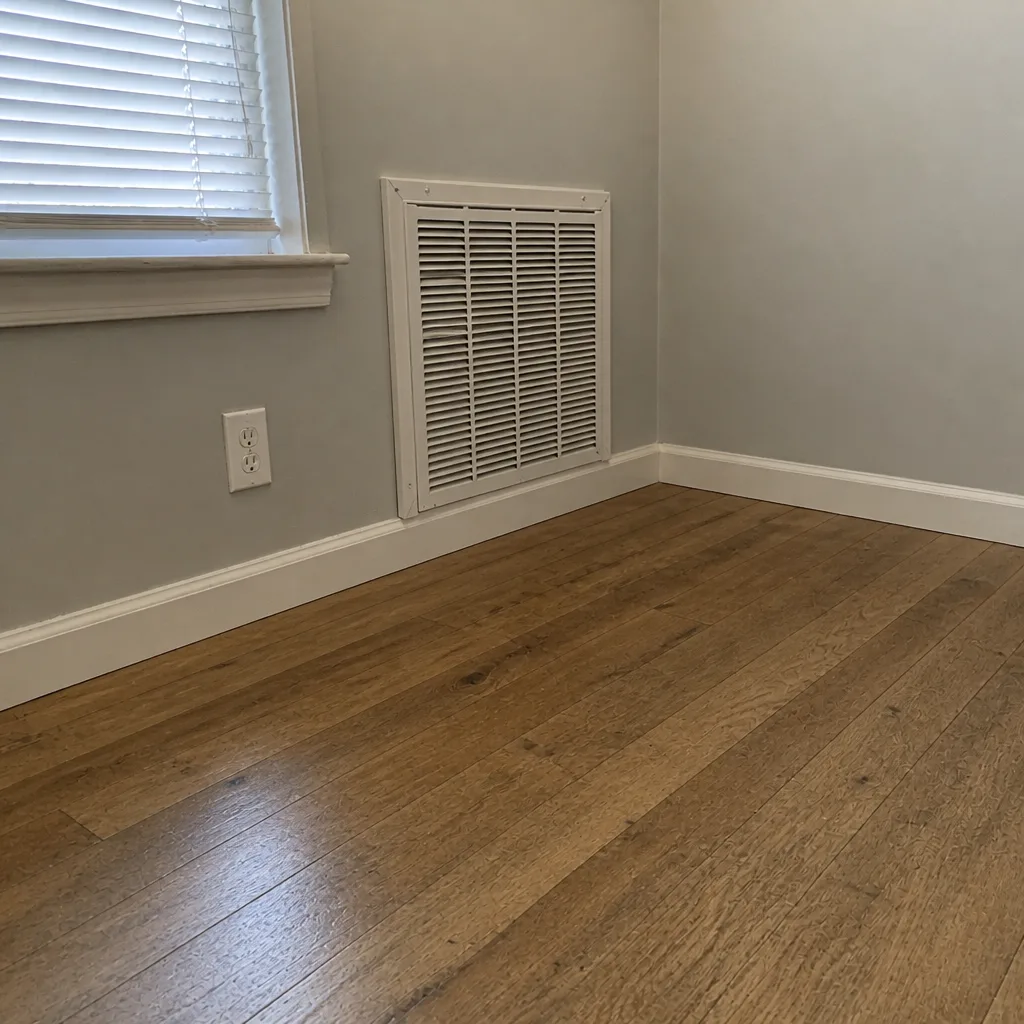
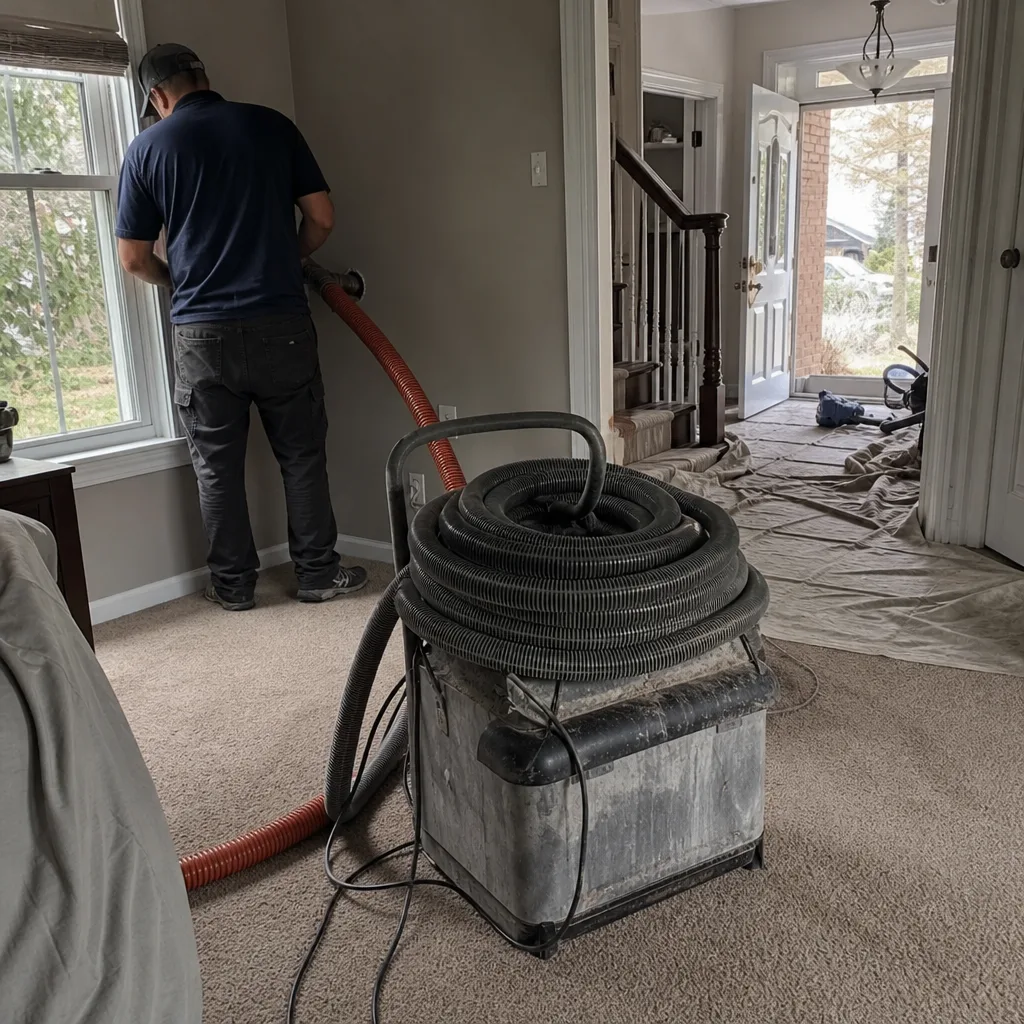
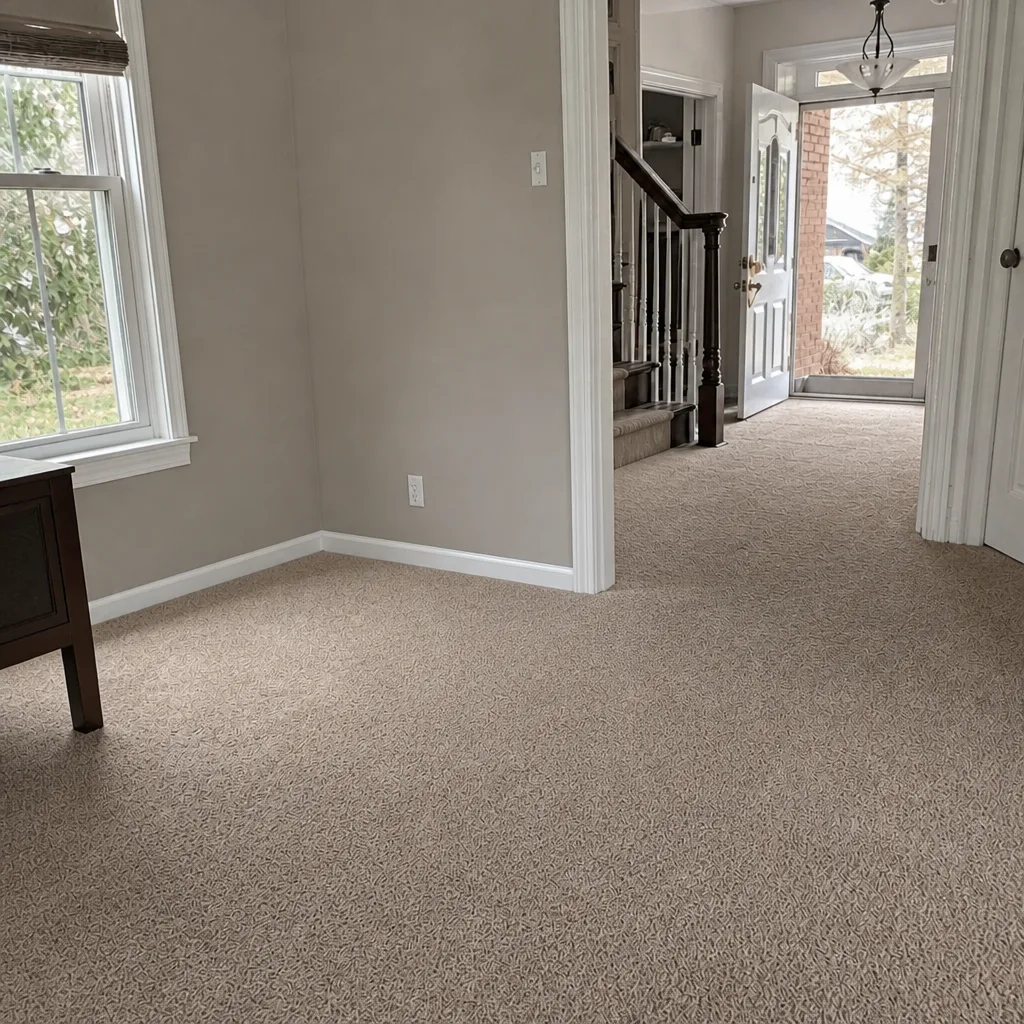
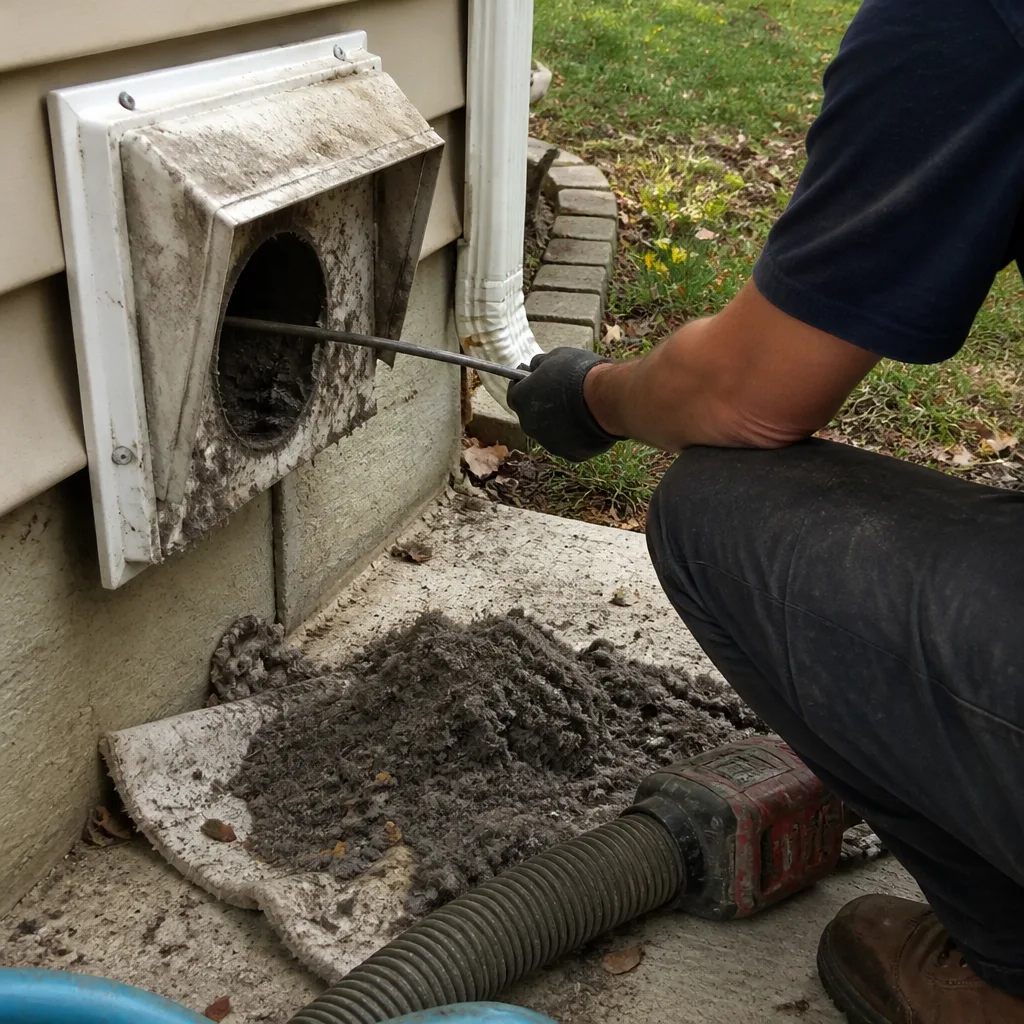
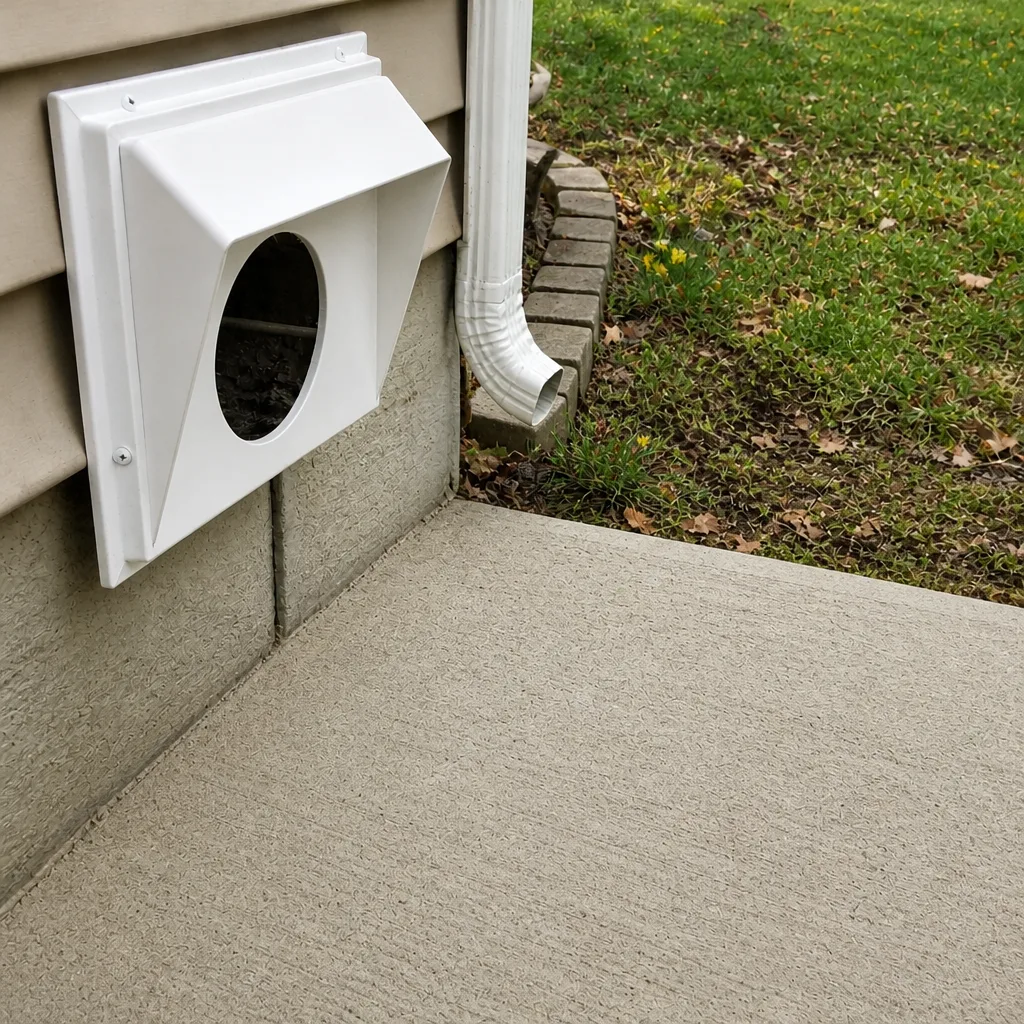
Whole-system duct and dryer vent check with before-and-after photos - you see exactly what came out of your vents
That "$99 whole-house special" is a bait ad - the real number appears once they are in your hallway, or the "clean" is a shop-vac at the register. We photograph the inside of your ducts before and after instead.
Air Duct Cleaning Warning Signs: A Columbia Homeowner’s Reference Guide
Most homeowners treat a recurring symptom like a battle. They call the allergist about the morning sniffles. They call the HVAC tech about the bedroom that never gets warm. They chalk up the dust to an old house and the musty smell to the weather. What rarely gets a call is the ductwork itself, even though it touches every room and carries every breath of air the furnace or air handler moves. If your allergist and your HVAC tech have both shrugged at your recurring symptoms, the duct system is the overlooked third variable, and it’s one you can actually inspect yourself before you pay anyone. This guide maps the signs Columbia homeowners most often misread to the duct problems that usually produce them, so you can stop treating effects and start addressing causes.
Styles & brands we work with
- Whole-home duct cleaning
- Dryer vent cleaning
- Camera inspection
- Sanitizing & deodorizing
Quick Answer
The main warning signs that your air ducts need professional attention are: visible dust or debris rings around supply and return grilles, uneven room temperatures that persist after HVAC service, a musty or dusty smell that appears when the system starts, condensation on registers in summer, and a spike in dust after a renovation. These signal contamination, disconnected or blocked branches, or moisture inside the system. A visual check and a professional inspection are the fastest way to confirm which problem you’re dealing with in a Columbia home.
Table of Contents
- Why Duct Problems Get Misdiagnosed
- Uneven Room Temperatures: A Branch Problem, Not Always the Unit
- The Visual Inspection You Can Do at Your Grilles
- Post-Renovation Warning Signs You Should Never Ignore
- Odor Diagnostics: What the Smell Tells You
- Condensation and Humidity: Columbia’s Summer Signal
- When to Call a Professional
- Frequently Asked Questions
Why Duct Problems Get Misdiagnosed in Columbia Homes
Ductwork is the least-visible part of your HVAC system, which is exactly why it gets blamed last. The furnace, the air handler, and the thermostat all sit where you can see or reach them. The ducts run behind drywall, through crawlspaces, and above ceilings in the conditioned space of a Columbia home. When a bedroom is cold or the air smells stale, homeowners look at the equipment they know how to look at first. That’s a natural response, and it’s also where a lot of money gets spent chasing the wrong repair.
Consider the pattern we hear most often: a homeowner calls an HVAC contractor because one room never heats or cools like the rest. The contractor checks the unit, confirms the refrigerant charge, replaces a filter, and tells the homeowner everything is running fine. The room stays cold. Months later, a duct inspection reveals a disconnected branch that’s been dumping conditioned air into a crawlspace the whole time. The equipment was never the problem.
In our experience, the diagnostic signals that point to ductwork specifically tend to cluster:
- A room temperature problem that’s consistent across seasons and doesn’t follow HVAC service calls
- Dust patterns that reappear quickly after cleaning, especially at grilles in one zone
- Smells that occur at system startup but fade while the system runs
- Allergy-type symptoms that improve when you leave the house and worsen on return
- Condensation, staining, or a powdery residue on registers or nearby drywall
None of those alone proves a duct problem. Together, they point at the ventilation pathway rather than the equipment. The guide below works through the specific signs and, more importantly, what each one is telling you about what’s actually happening inside the system. For a broader look at the service itself, see our overview of air duct cleaning.
Uneven Room Temperatures: A Branch Problem, Not Always the Failing Unit
If one room in your Columbia home is persistently warm in summer and cold in winter while the rest of the house stays comfortable, the most likely cause is a duct branch that’s blocked, disconnected, or undersized, not a failing HVAC unit. The unit is conditioning the air; the question is whether that air is reaching the room it’s supposed to.
Here’s how to tell the difference between an equipment problem and a duct problem. An equipment problem usually affects the whole house at once, because a single air handler feeds every room. A duct problem typically affects a specific room or zone, because the branch supplying that area has a fault. If the discomfort is localized, look at the ductwork before you replace the furnace.
Common causes of a cold or hot room that trace back to ductwork:
- Disconnected branch: a flex or rigid duct that’s separated from the trunk and is now dumping conditioned air into an attic or crawlspace
- Blocked branch: debris, a collapsed section, or a damper stuck closed
- Undersized branch: a duct that was never sized to deliver the airflow the room needs
- Leaky joints: gaps at seams or fittings bleeding air before it reaches the register
- Crimped flex duct: a duct bent sharply where it runs through a tight cavity, cutting airflow
A simple test is a handheld infrared thermometer pointed at each supply register with the system running a steady cycle. Wide temperature differences between adjacent rooms, or a register with almost no airflow, are the signals worth writing down. A register that blows room-temperature air when the system is producing cold air is a stronger sign still.
A trained technician confirms the difference with a system-level inspection and airflow readings. Because a disconnected branch is often also a contaminated one, we handle air duct repair alongside cleaning rather than treating them as separate visits.
The Visual Inspection You Can Do at Your Grilles
You don’t need tools to spot most duct warning signs, just a flashlight and a steady look at each supply and return grille. A grille is the one place ductwork meets the room, so what you see there is often what’s happening inside the system.
Work through the house and inspect each grille for these signals:
- Debris rings. Look at the edges of the grille blades and the drywall immediately around them. A dark, sooty ring, or visible gray dust accumulation on the blades themselves, is the most reliable visible sign of airborne debris traveling through the duct.
- Discoloration. Yellow, brown, or gray streaks on the ceiling or wall adjacent to a register can mean moisture or debris escaping a poorly sealed boot.
- Mold signatures. Fuzzy, splotchy, or powdery-looking growth on the grille face or the duct throat behind it. Any sign of mold means you stop DIY inspection and call a professional for a proper assessment.
- Loose debris. Fine grit, drywall dust, or small particles on the floor directly beneath a supply register, especially if they reappear quickly after cleaning.
- Visible dust on the return face. A return grille clogged with dust and lint means the system is recirculating particles rather than filtering them cleanly.
- Grille soiling in one area. If two grilles side by side look the same age but one is far dirtier, airflow through that branch is off or the branch is closer to the source of contamination.
Remove the grille only if you can do it safely and comfortably, and never reach into the duct itself. The duct interior holds sharp edges, wire, and other hazards, and a flashlight view through the grille opening is usually enough to tell you whether a professional inspection is warranted. If what you see looks like mold or significant debris, the next call is a professional one.
Post-Renovation Warning Signs You Should Never Ignore
Drywall dust visible in supply or return registers after a kitchen, bathroom, or basement remodel is a near-certain indicator that your ducts are contaminated. Renovation work generates the worst kind of dust for a duct system: fine gypsum particles that stay airborne for days, plus sawdust, insulation fibers, and caulk or paint debris that can settle into the ductwork and never get out through the filter. This is one of the most avoidable duct problems in Columbia and one of the most common we see.
Watch for these post-renovation signs in the weeks after the work is done:
- Drywall dust in registers. Pull a grille and shine a light down the throat. Fine white or gray powder is gypsum dust.
- Dust on horizontal surfaces in the finished space. Visible dust storms across furniture, trim, or shelving that never settle
- HVAC filter plugged early. A filter that darkens in a fraction of its usual interval after a remodel means dust is still being pulled through the system
- New smells after a remodel. A faint chemical or musty note from the registers
- Airflow that seems weaker. Reduced output at a few or all registers as debris accumulates
If your remodel hit the duct system directly, or if you used a contractor who wasn’t careful about covering the grilles during the demolition phase, the contamination is likely worse than a filter change can fix. The full pathway, from the return grille through the trunk and branch, needs a real clean, not a quick pass over the supply boots.
Two practical rules for future work. One, tape over every supply and return grille before demolition begins. Two, put a fresh filter in the moment the job ends, not weeks later. If your renovation is already done and the dust is in the registers, a professional duct cleaning is the right next step. A quality job uses containment-grade equipment. We use Abatement Technologies filtration on-site specifically so that the dust we remove doesn’t end up back in your air.
Odor Diagnostics: What the Smell Tells You
An odor in a duct system is a diagnostic signal, and the timing of the smell tells you as much as the smell itself. Musty smell at startup, persistent odor, and intermittent odor each point to different root causes inside the system, and treating the wrong one wastes money.
Musty smell at startup
A musty or “basement smell” that appears for a few seconds when the heat comes on, then fades, is the most common pattern we see. It usually means dust has collected on the heat exchanger or the supply trunk, and the first blast of warm air lifts the odor. It’s less alarming than it sounds, but it does mean debris has accumulated somewhere in the system and deserves a look.
Persistent odor
A smell that doesn’t go away with a furniture polish, a candle, or an HVAC filter change is usually the sign of an active moisture or microbial issue inside the duct system. That’s not a scent problem; it’s a moisture problem, and it needs a professional inspection with a proper light and mirror look at the duct interior. If the persistent smell is musty and worse in one area of the house, that area’s branch is the one to investigate first.
Intermittent odor
A smell that comes and goes with weather, humidity, or the time of year often points to a moisture cycle inside the ductwork. During humid Columbia summers, condensation inside the duct can support growth that dries out and stops smelling in lower-humidity weather. That cycling pattern is easy to dismiss and worth not ignoring.
Other odor signals and what they often mean:
- Burning or hot-plastic smell: could indicate an electrical issue. Shut the system down and call a professional, not a duct cleaner.
- Chemical or solvent smell: often traces back to stored products, recent paint, or a renovation
- Animal smell: pest intrusion in the duct system. This requires both duct cleaning and a repair to seal the entry point.
If the smell is new and accompanied by dust in the registers, the ducts are worth a professional look. If it’s a hot or burning smell, stop and call your HVAC contractor first. Then book a cleaning once the safety issue is handled.
Condensation and Humidity: Columbia’s Summer Signal
Condensation on registers in the middle of a humid Columbia summer is a system-level signal, not a cosmetic issue. When cold conditioned air hits a register face that’s cooler than the surrounding air’s dew point, moisture forms. A few beads in extreme humidity aren’t alarming by themselves. Persistent condensation, dripping, or water stains near the register means something in the system is below dew point when it shouldn’t be, and that’s worth understanding before it becomes a bigger problem.
The climate context matters. Columbia summers run hot and muggy. The gap between the supply air temperature and the surrounding room temperature is bigger on a humid day than a dry one, which makes condensation more likely to appear at the coldest registers. The same humidity can also make the return air feel damp when the system isn’t running, which is why “the house feels sticky” often gets blamed on the AC when the true cause is a moisture load inside the ductwork.
What to look for and what each sign suggests:
- Condensation on supply registers: usually an insulation gap on the duct boot, briefly cold air in a very humid room, or the register itself sitting outside the conditioned envelope
- Water stains around a register: a duct boot that’s not sealed or insulated, letting moist air meet a cold surface
- Damp or musty air from returns: a system pulling air from a humid crawlspace or basement through an unsealed return
- Humidity that won’t come down on normal AC days: the AC may be running fine, but humid air is leaking in through the duct system
- Fogging at the register on startup: very cold air in a humid room, most common in a bathroom with high humidity running at full cold
If you’re seeing persistent condensation in a Columbia home, the right fix is a duct inspection that checks the boot, insulation, and return seals, not necessarily a dehumidifier. Dehumidifying a room that’s being fed humid air from a leaky return solves nothing. Our team uses Guardsman-grade products where protection or moisture control is part of the cleaning and repair scope. For whole-home indoor air quality, we work alongside Honeywell and Aprilaire equipment, since a good duct system and an IAQ device should be designed together rather than installed as separate systems. Dryer vents sit outside that scope, but they’re on the same ventilation footprint; see dryer vent cleaning if you’re scheduling a full-system visit.
Less Obvious Signs: What Your Body and Your Routine Are Telling You
Some of the strongest duct signals aren’t visible at all. They show up in your body’s reaction to the house, or in the way your daily routine has quietly shifted around the problem. Paying attention to them can confirm what the physical signs suggest.
Patterns worth noting:
- Symptoms that improve when you leave the house. Morning congestion or a scratchy throat that clears after you’ve been out for an hour or two, then returns after a night at home, is worth tracking.
- A repeatable morning pattern. Sneezing or dryness that shows up in the same room at the same time of day points at the delivery of air through that room’s branch.
- New symptoms in a new part of the house. If family members started reacting after moving into a lower level or an addition, the duct system serving that space is worth inspecting.
- Filters that plug early. A filter that clogs much faster than it used to means the system is pulling more particles than it used to, and that’s usually either a filter upgrade issue or a duct contamination issue.
- Furniture dusting that doesn’t last. If dusting that used to last a week is now showing visible dust in a day, something is putting particles into the air faster than before.
None of these is a hidden diagnosis. They’re simply additional signals to raise with a technician who can inspect the system. We don’t issue health claims; anyone who does in duct cleaning is selling, not diagnosing. The honest version is that we find the debris, the disconnected branches, and the moisture issues that measurably degrade air quality. What that does for your symptoms is between you and your doctor.
Common Mistakes to Avoid
Most mis-steps we see come from well-meaning homeowners doing the understandable thing without the diagnostic context. Avoid these seven patterns, especially in Columbia, where the humid summers amplify every one of them.
- Blaming the HVAC unit when the branch is the problem. A new furnace install doesn’t fix a disconnected duct branch. Have the ducts inspected before you replace the equipment, not after. A localized temperature problem that survives a service call almost always traces to the duct system.
- Skipping duct inspection after a renovation. Drywall dust from a kitchen or bathroom remodel goes into the ducts and stays there. Skimp on the cleaning and you’ll be dusting the whole first floor every few days for a year. Tape the grilles before demo, and clean them properly after.
- Assuming a smell that fades isn’t a problem. A musty smell at startup that fades might mean debris on the heat exchanger, or it might mean growth inside the trunk. Either way, a look inside the system tells you what’s actually happening.
- Treating condensation on registers as a cosmetic issue. In a Columbia summer, condensation is a signal about duct insulation, boot sealing, or return leakage. Left alone, it can become a moisture problem that affects the whole system.
- Calling the cheapest quote and expecting the same result. A very low quote often means a quick pass over the supply grilles with a shop vacuum, not a full-system clean. Ask whether the quote includes rotary brush agitation, the return side, and the trunk and branches. If it doesn’t, it’s not the same service.
- Cleaning once and never thinking about it again. In a well-sealed, low-shedding home, a clean every several years is reasonable. In a home with pets, renovation, or a recent move, the interval is shorter. There’s no fixed rule, but there is a schedule that fits your home, and it’s worth setting.
- Letting a small duct repair wait. A disconnected branch, a torn flex section, or an unsealed boot can leak conditioned air indefinitely. Small repairs get larger and more expensive the longer they’re ignored, and the energy cost of running the system with a leak doesn’t go away.
If you’ve spotted two or more of the signs in this guide, you’re at the point where an inspection makes sense. That’s the right time to call, not after a full season of symptoms.
When to Call a Professional
The right time to call a professional duct cleaning service in Columbia is when you can identify at least two of the signs covered in this guide, when you’re moving into a home whose cleaning history is unknown, when a renovation has just finished, or when any of the more serious signals appear: visible mold, pest intrusion, persistent condensation, or a burning smell at the registers.
The relevant service lines here are duct cleaning, dryer vent cleaning, and duct repair, and the last one is where a lot of small problems get fixed that would otherwise get cleaned around indefinitely. If you’re not sure which of the three you need, ask on the phone. A good technical conversation on the call usually settles it before anyone arrives.
Stallion Air Duct Cleaning offers free estimates in Columbia – call (866) 643-6070. We answer 24/7. Fast dispatch from 7am to 7pm, Sunday through Friday. Every job is priced per system by written estimate agreed before work starts, and you’ll see before-and-after photos of your own ducts so you know exactly what changed.
You can also start with the Columbia service overview if you want to understand what an inspection and cleaning visit involves. If you need both a cleaning and a repair in one visit, we handle them in a single trip. Our technicians have up to 13 years of experience, and the equipment we run is professional duct cleaning gear, not repurposed shop vacuums.
Frequently Asked Questions
Air duct cleaning in Columbia is priced per system, not per vent, and quoted by written estimate before work begins. The price depends on the size of the system, the number of zones, and whether duct repair is needed. We don’t quote coupon pricing or per-vent numbers because those encourage the same quick-pass clean that leaves most of the problem behind. Call (866) 643-6070 for an exact quote – estimates are free.
You need duct cleaning if you can verify at least two signals: visible dust rings or debris at the grilles, post-renovation dust in the registers, persistent odor from the system, persistent condensation, or allergy-type patterns that clear when you’re away from home. If you’re not seeing those, it’s fine to wait. A good technician will tell you when cleaning isn’t the right call. Ask for the inspection notes.
Cheap duct cleaning quotes are usually for a surface pass with a shop vacuum over the supply grilles, with no rotary brush agitation, no return-side cleaning, and no documentation of what was actually removed. That’s not the same service as a full-system clean, and the low number reflects it. Ask any cleaner what equipment they use and whether they clean the return and trunk. The answer tells you whether the price is comparable.
Most Columbia homes do well with a full-system cleaning every several years, but the right interval depends on pets, occupants with allergies, and renovation history. A home with shedding pets, a recent remodel, or a family member with dust sensitivity typically benefits from a shorter cycle. Ask a technician to assess the system and suggest a schedule that fits your home specifically. Call (866) 643-6070.
Only if the uneven temperature traces to a duct fault that cleaning and repair can address: a blocked branch, a disconnected section, or an unsealed boot. In that case, yes, cleaning plus repair often restores airflow to a cold or warm room. If the room was never ducted correctly, cleaning won’t change the airflow the system can deliver, and that’s a design problem to address separately.
Ask for before-and-after photos of your own ducts taken during the visit. A company that cleans to a documented standard is happy to show what it removed and what the duct interior looks like afterward. If photos aren’t offered, ask for them before booking. You are paying for a documented job, so it should be documented.
The Bottom Line
Duct problems are mostly invisible until you know what to look for. The signs in this guide, dust rings at grilles, uneven room temperatures that follow a specific zone, post-renovation dust in the registers, musty or persistent odors, and condensation in Columbia’s humid summers, are all diagnostic clues, and each one points at something specific inside the system. The goal is pattern recognition, not alarm. Two or more signs is a reason to inspect, not necessarily a reason to panic. From there, the choice is between a documented full-system clean with proper equipment and repair, and a quick pass that leaves the cause in place. If you’re not sure which one your home needs, a free estimate and a proper look inside the system will settle it.
Call Stallion Air Duct Cleaning at (866) 643-6070 to book a free estimate. We answer 24/7. Fast dispatch from 7am to 7pm, Sunday through Friday. Our technicians have up to 13 years of experience, and we run Rotobrush and Nikro equipment on every job. Every job is priced per system by written estimate, and you’ll leave with before-and-after photos of your own ducts. For the full picture of our services, visit Stallion Air Duct Cleaning.
Written by the team at Stallion Air Duct Cleaning.
See the difference
 Before
 After
 Before
 After
 Before
 After